

Want to get into sourdough baking? Read this first! (you’ll thank us later)
During the pandemic, interest in bread baking soared, particularly for sourdough. While this was great, the initial enthusiasm often waned as new bakers encountered the steep learning curve. Why? Many folks didn’t go in prepared! In this guide, we’ll first explore what sourdough is and how it differs from bread made with commercial yeast. Then, we’ll give you 5 essential rules that will make your sourdough journey more successful and much more fun.

What is Sourdough?
Sourdough is bread leavened through a natural fermentation process. Instead of adding a packet of commercial yeast, sourdough relies on a symbiotic culture of wild yeasts and lactic acid bacteria captured from flour, water, and the environment. This culture, known as a “sourdough starter,” is a living ecosystem. The yeasts consume carbohydrates and produce carbon dioxide gas, which makes the dough rise. Simultaneously, the bacteria produce lactic and acetic acids, which develop the bread’s signature tangy flavor, complex aroma, and help to preserve it naturally.
Sourdough vs. Commercial Yeast Bread
Complex Flavor
The most significant difference is flavor. Commercial yeast provides a straightforward, one-dimensional rise. In contrast, a sourdough starter’s diverse community of dozens of yeast and bacteria species work together, creating a wide spectrum of aromatic compounds. This results in a more complex, tangy, and deeply flavorful end result that mono-culture yeast simply cannot replicate.

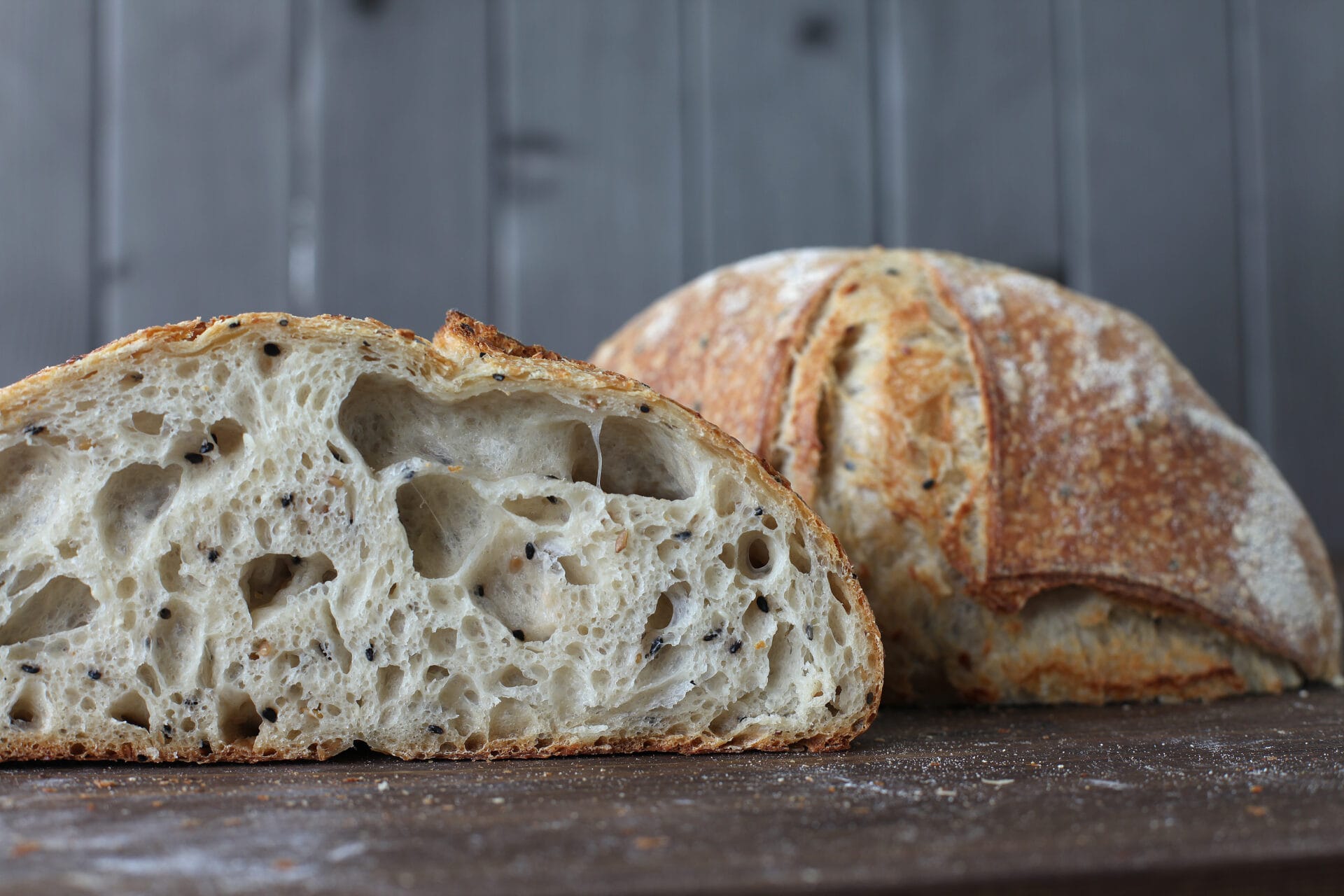
Texture & Digestibility
Sourdough often has a chewier, more satisfying texture with a crispier crust, thanks to the long, slow fermentation that properly develops gluten. This extended process, along with the acids produced, also begins to break down proteins and phytic acid in the flour. This makes sourdough easier to digest for many people and increases the bioavailability of minerals like iron and zinc. Furthermore, sourdough bread typically has a lower glycemic index.
The 5 Rules for Sourdough Success
Sourdough baking has more variables than baking with commercial yeast, which means more things can go wrong. Following these five rules will help you find success and enjoyment in your journey.
1. Use One Technique
The internet is filled with a multitude of sourdough books, blogs, and videos, each with slight variations. One uses 15% starter, another 25%. Some use stretch-and-fold, others use no-knead. While each method can work, combining them randomly will not. Pick one trusted book or channel and stick with that single method until you master it. Consistency is how you build skill.
2. Start Simple
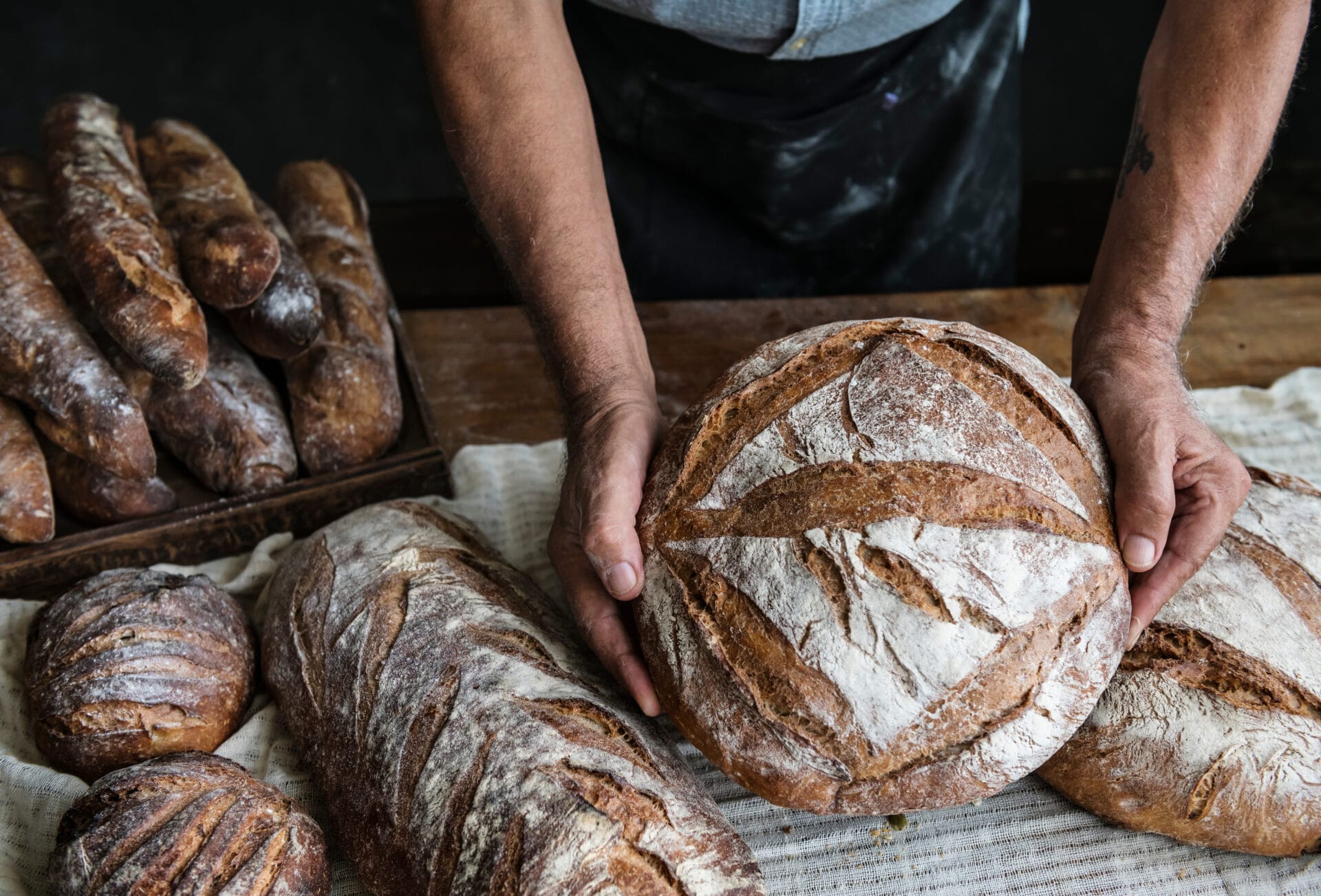
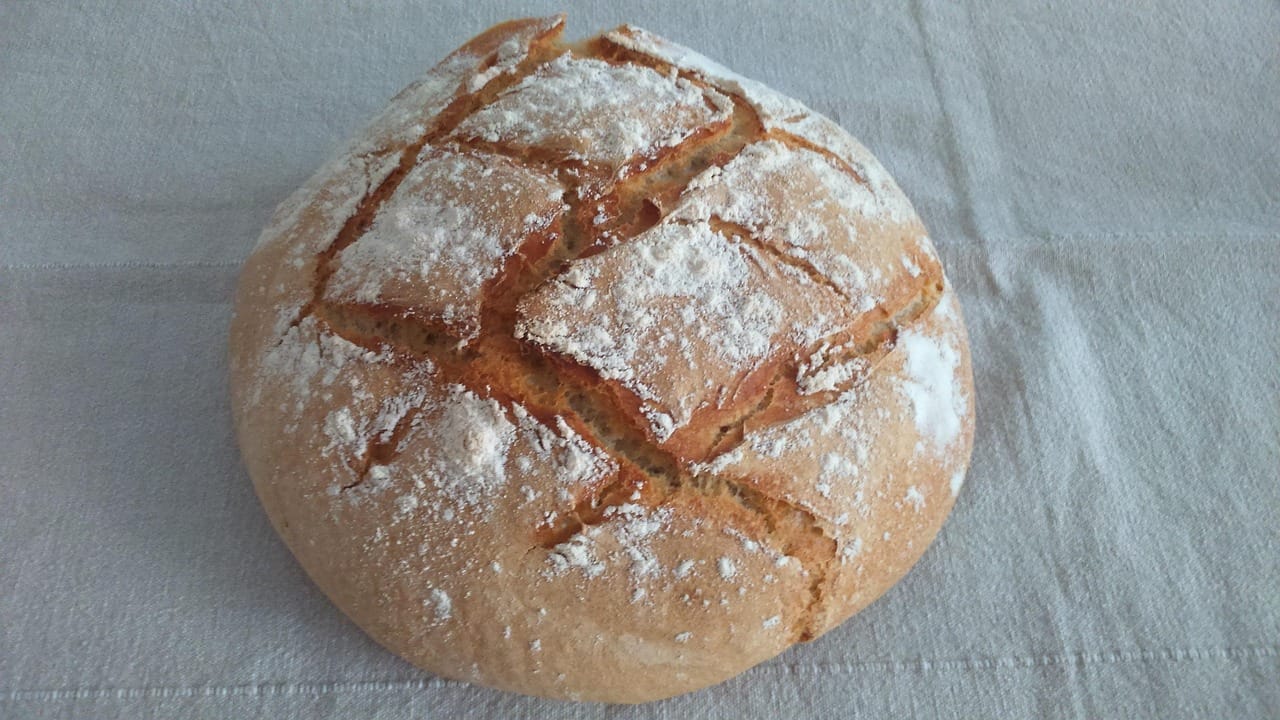
Don’t begin with a whole-grain spelt and pecan loaf. You will fail. Start with a simple white wheat sourdough bread. This allows you to focus on the many core techniques: starter health, kneading, shaping, scoring, and baking. It’s challenging enough as it is. Once you can consistently bake a great white loaf, then start experimenting by adding small amounts of other flours.
3. Start with Yeast
It may sound counterintuitive, but begin by using a small amount of commercial yeast *in addition to* your sourdough starter. This hybrid method guarantees a decent rise, allowing you to practice shaping, scoring, and baking with less pressure. As you gain confidence, gradually reduce the amount of commercial yeast with each bake, until your starter is doing all the work on its own.

4. Write Everything Down
The number of variables in sourdough baking is endless: room temperature, starter activity, hydration levels, timing, humidity. The more of these variables you can control, the more consistent your results will be. Keep a detailed baking journal. Writing everything down will give you invaluable insight and accelerate your learning.
5. Repeat
It is far better (and more satisfying) to become an expert at baking one type of bread than to be mediocre at baking ten. Keep baking that same simple loaf. Tweak one variable at a time. Once you have truly mastered it, then—and only then—start exploring new recipes.


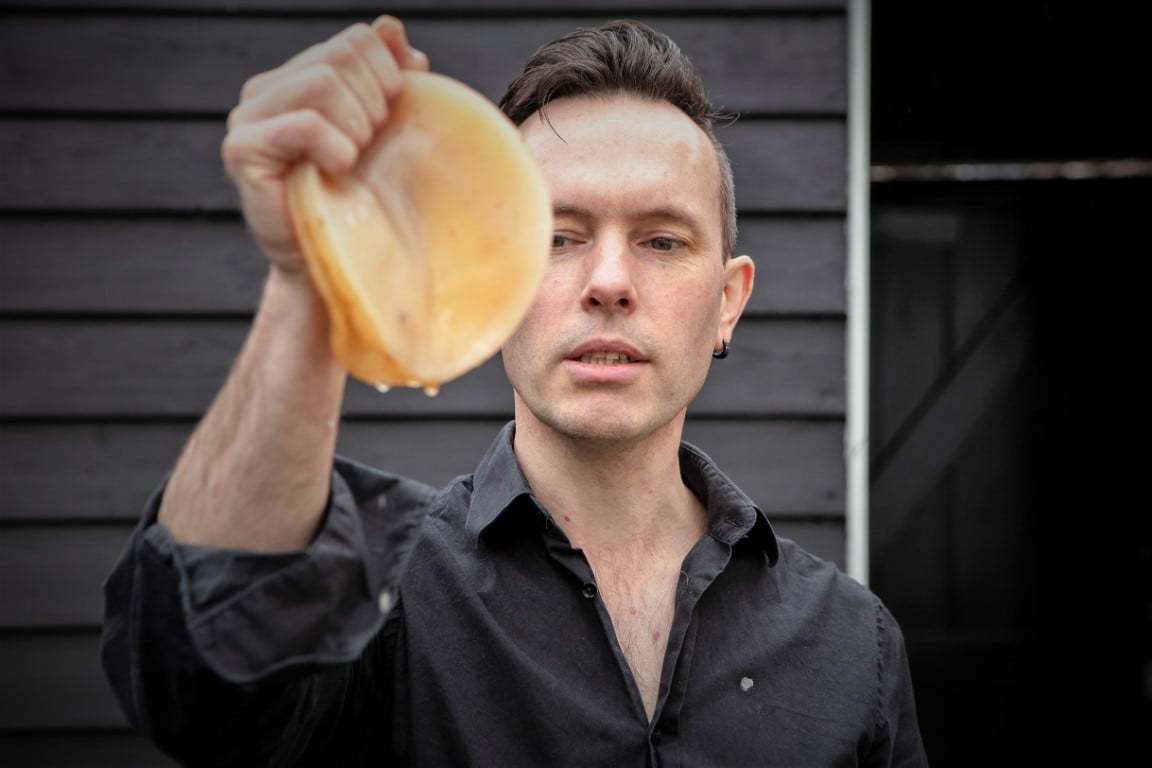
About the author (Meneer Wateetons)
Meneer Wateetons (a pseudonym derived from the name of his blog, which literally means ‘Mr. what-eats-us’) is a renowned Dutch food writer, PhD scientist, teacher, fermentation expert, sausage maker, and the owner of startercultures.eu. He has written nine books on culinary topics such as fermentation, alcohol production, sausage and charcuterie making, and deep-frying. Through his books, (online) courses, and corporate trainings, he has shared his knowledge with countless hobby cooks, chefs, and food professionals. Learn more about Meneer Wateetons.


Leave A Comment