
Aspergillus sojae | for soy sauce and miso
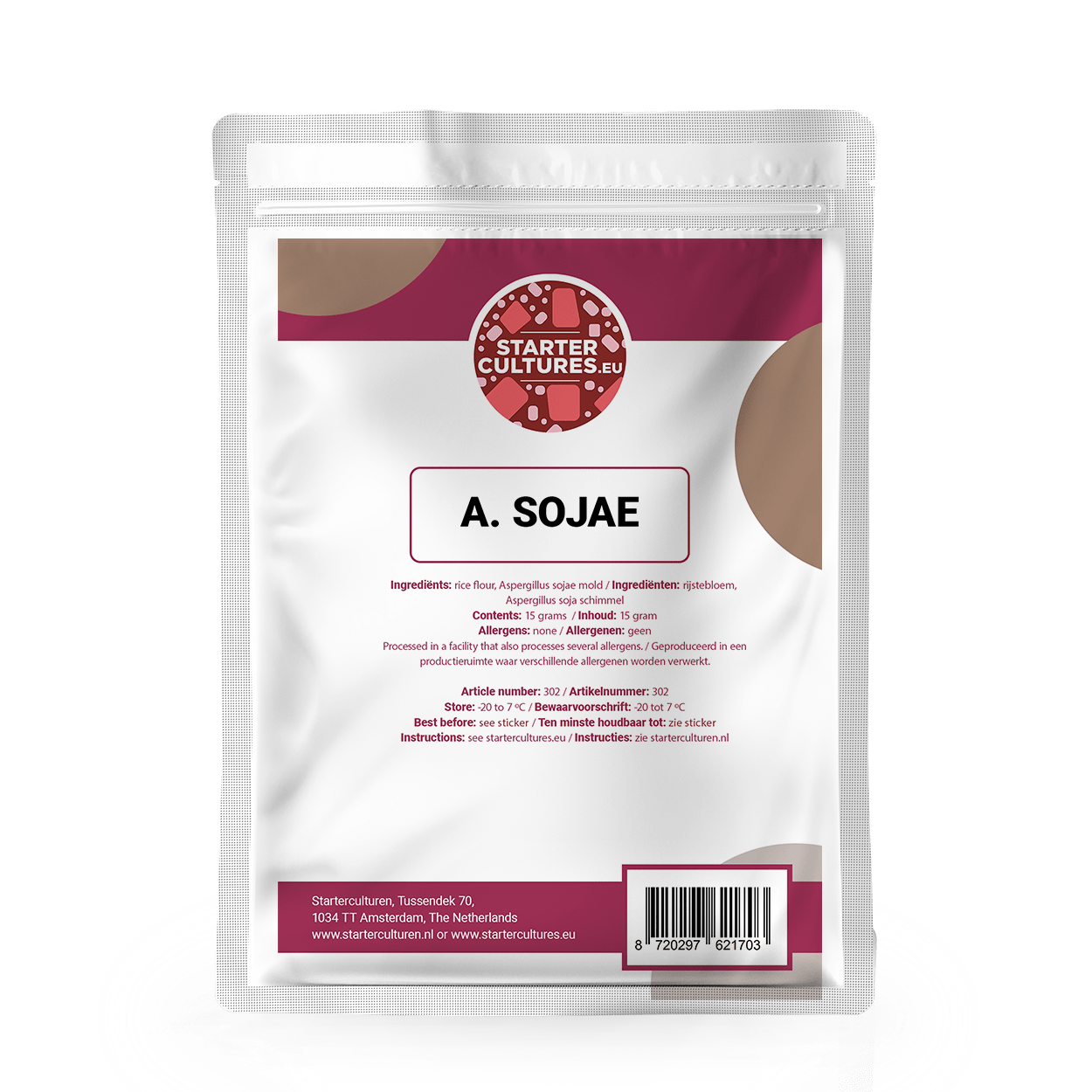


Aspergillus sojae is used to make the ferment (kōji) of soy sauce, miso, mirin, and other fermented condiments such as tsukemono. You can make soysauce by fermenting soybeans with A. sojae, along with water and salt.
Product Description
Aspergillus sojae is a type of mold that is widely used in the production of traditional Asian fermented foods, such as soy sauce, miso, and sake. This mold belongs to the genus Aspergillus, which comprises over 300 species.
What is Aspergillus sojae used for?
Aspergillus sojae is particularly valued for its ability to produce a variety of enzymes, including proteases, lipases, and amylases, which play a crucial role in the fermentation process. These enzymes break down the proteins, fats, and carbohydrates present in the raw materials, releasing flavor and aroma compounds and transforming the texture and nutritional properties of the final product. A sojae is particularly good at breaking down proteins and will result in koji with less sweetness, making it perfect to make salty fermented food like soy sauce or miso- and hence creating umami.
In Japan, it is used to make the ferment (kōji) of soy sauce, miso, mirin, and other fermented condiments such as tsukemono. Also, you can make soy sauce by fermenting soybeans with A. sojae, along with water and salt.
The difference between Aspergillus oryzae and Aspergillus sojae.
Compared to Aspergillus oryzae (‘koji’), the other widely used mold species in traditional Asian fermentation, Aspergillus sojae has a more pronounced proteolytic activity – meaning it is particularly good at breaking down proteins and creating umami- which makes it especially suitable for producing fermented soybean products. However, the two species share many characteristics and are often used in combination to achieve a balanced and complex flavor profile.
Another difference between the two species is their morphology. Aspergillus oryzae typically grows as a fluffy, white mold, while Aspergillus sojae tends to produce darker, more velvety mold.
Content
- Ingredients: rice flour, Aspergillus sojae mold
- Available in two sizes: 15 gr. for 5 kg or 200 gr. for 900 (!) kg of soybeans
- Storage instructions: shelf life of the spores is at least 6 months in the refrigerator, more than one year in the freezer.
- Origin: Japan
The small standard packages contain pure spores mixed with rice flour. The spores are so light that they’re very difficult to dose accurately in small amounts of rice. The quantity is small, they tend to stick to the bag, and the slightest breeze can send them flying across your kitchen.
The bulk-use bags contain pure spores only — they are not mixed with rice flour, so the spore concentration is much higher. With just 40 grams, you can make, for example, 200 kg of product or 360 liters of shoyu, depending on the type of koji.
Online Miso making course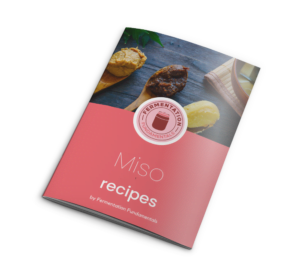
In 25+ bite sized English spoken video lessons you will learn all about making Miso, without the need for special tools, in this online course by the founder of startercultures.eu. You will learn to make traditional, or ANY kind of Miso, save money, by never having to buy Miso again, and incite your culinary creativity!
Read More >
Aspergillus sojae is used to make the ferment (kōji) of soy sauce, miso, mirin, and other fermented condiments such as tsukemono. You can make soysauce by fermenting soybeans with A. sojae, along with water and salt.

3 reviews for Aspergillus sojae | for soy sauce and miso
Show only reviews in English (2)