

Tofu vs. Tempeh: What’s the Difference?
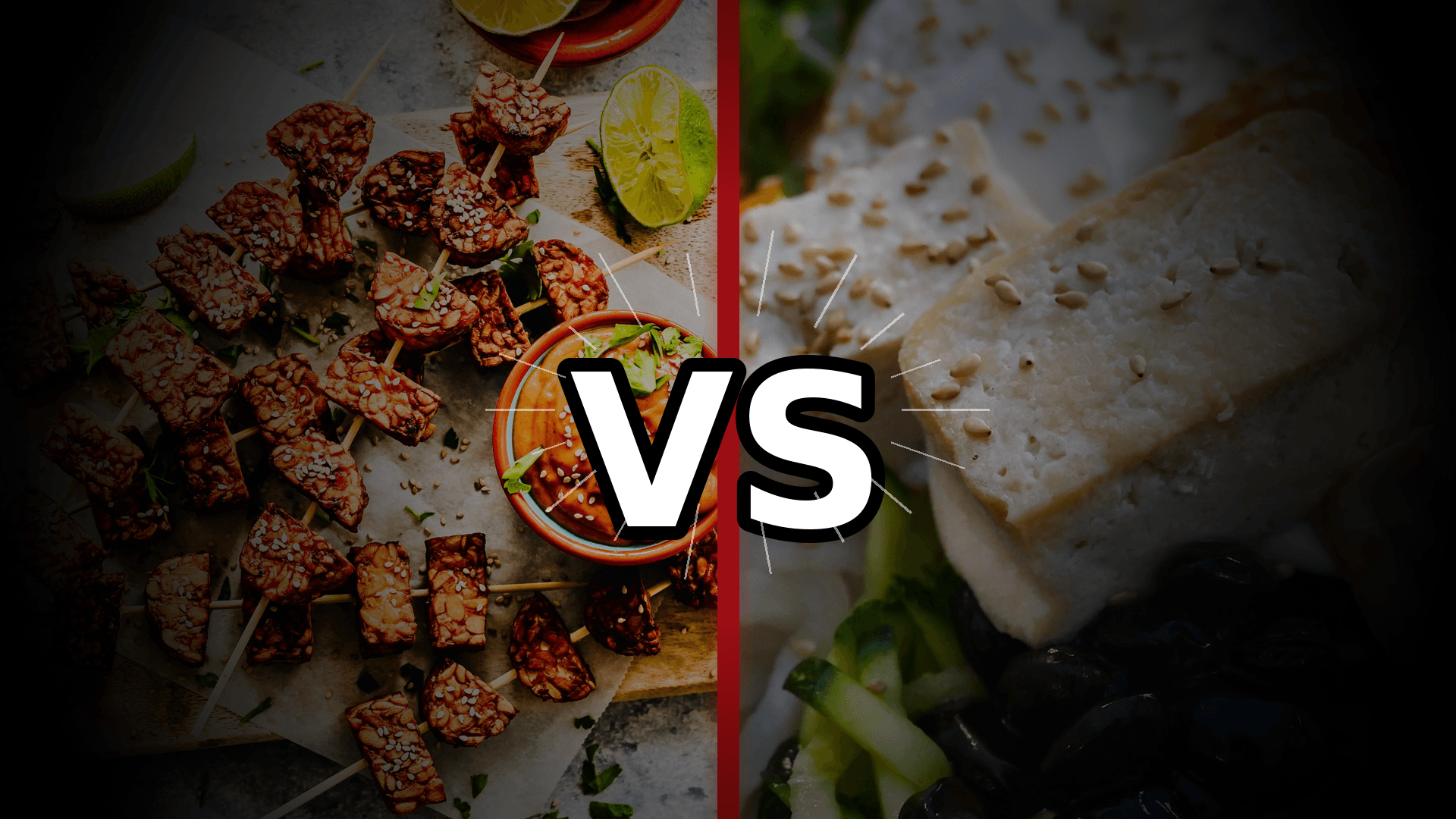
Vegan, versatile, and made from soybeans. Tofu and tempeh are a lot alike, yet there are also quite a few differences. Tempeh is a fermented soybean cake from Indonesia, though it also works well with other beans. Tofu is a kind of young ‘cheese’ made from curdled soybean milk. Let’s see what exactly the differences are.
The Core Differences
Production & Appearance
Tofu is made by coagulating soy milk—much like making cheese from dairy milk. A coagulant is added to the milk, which separates it into curds and whey. The curds are then pressed into a uniform white block. Its firmness depends on how much water is pressed out. Tempeh, by contrast, is made from whole, cooked soybeans that are fermented with a mold culture (Rhizopus oligosporus). The mold’s mycelium grows around the beans, binding them into a firm, textured cake with a white and brown appearance.

Flavor & Texture
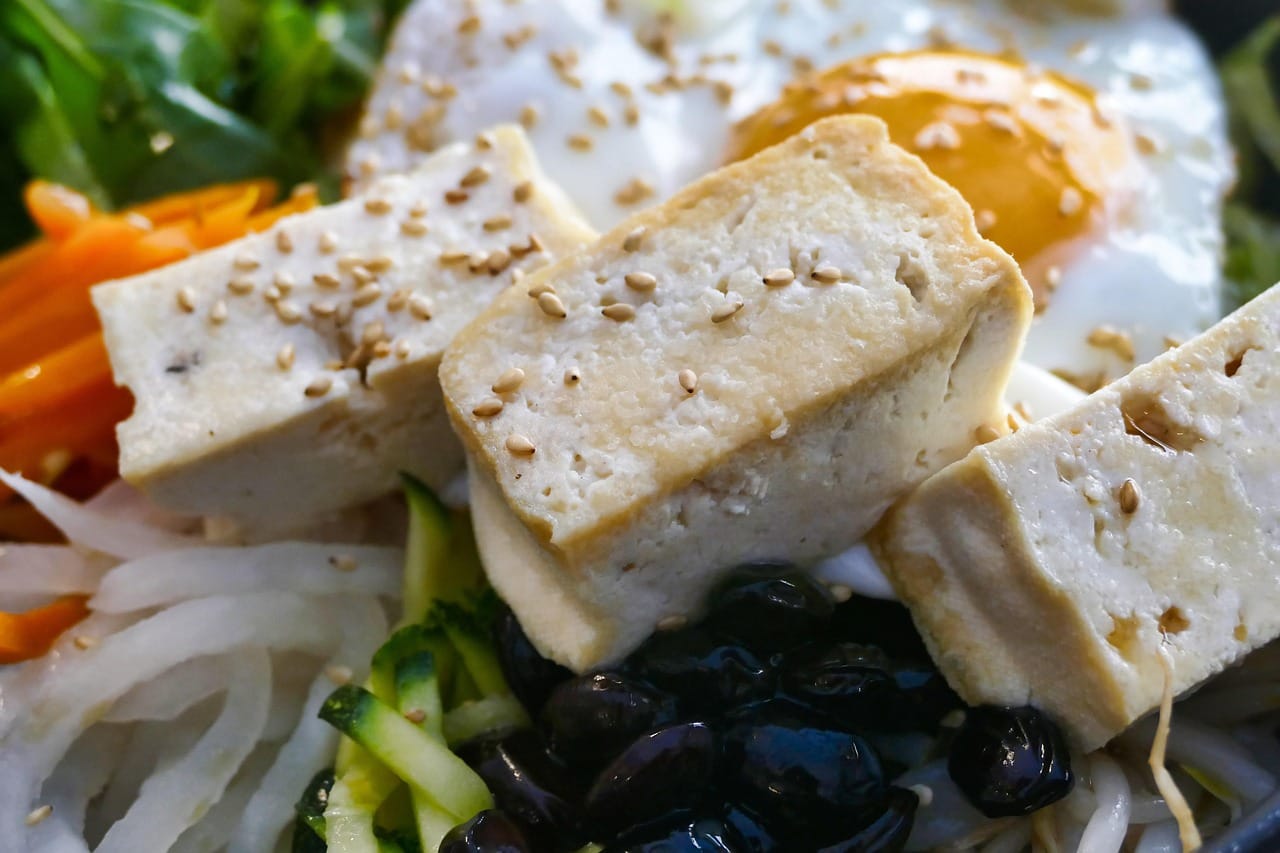
The two products have a vastly different taste and texture. Tofu has a very neutral, mild flavor, making it a culinary chameleon that absorbs marinades and sauces exceptionally well. Its texture is soft and smooth. Tempeh has a much more pronounced, nutty, and savory flavor of its own. It has a firm, dense texture and a satisfying bite. When cooked, tempeh gets crispy faster, while tofu develops a crispy exterior with a soft interior.
The ingredients
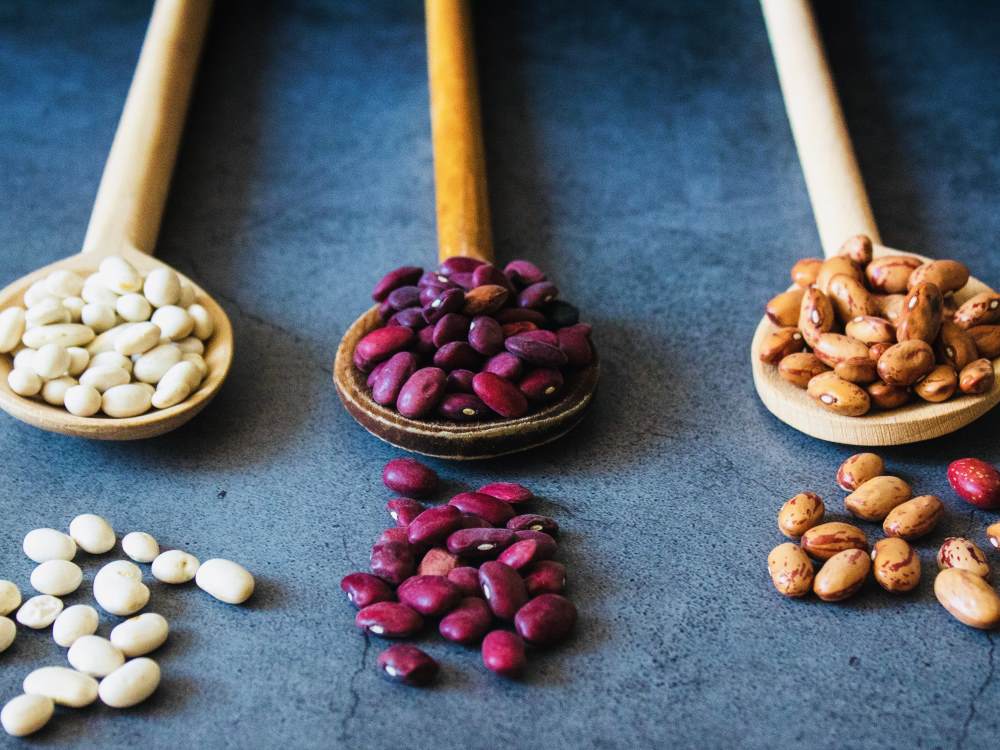
While both are traditionally made from soy beans, tempeh can readily be made from other beans such as black beans, or even from grains. Not so for tofu, that can really only be made from soy.
Health
Both tofu and tempeh are packed with nutrients and are excellent sources of protein. However, because it is fermented and uses the whole bean, tempeh generally wins on the amount of protein, fiber, and vitamins, making it slightly more nutrient-dense than tofu. It is also easier to digest. That said, both are fantastic, healthy additions to any diet!
Nutrition & Use in the Kitchen
Because it is made from whole soybeans, tempeh provides more energy, protein, carbohydrates, and fats than tofu. The quantity of fiber in tempeh is particularly striking, making it highly nutritious. The fermentation process also makes tempeh easier to digest. Both contain a wealth of minerals, but in different amounts: tempeh is higher in potassium and zinc, while tofu contains more calcium, magnesium, and iron. Here are some examples of how they can be used:
Tofu dishes
Tempeh Dishes
The winner?
Both tempeh as well as tofu are amazing, versatile and healthy foodproducts. They both shine in their own way. We cannot pick a winner. Can you?
Frequently Asked Questions
Want to learn more? Take our comprehensive tempeh course
In 30 bite sized English spoken video lessons you will learn all about making your own tempeh at home, without the need for special tools.
- Make tempeh out of every bean
- No need to ever buy tempeh again
- Become a better plant-based chef
- Many free bonuses
- Permanent access
This tempeh course is part of our Fermentation Fundamentals education program.


About the author (Meneer Wateetons)
Meneer Wateetons (a pseudonym derived from the name of his blog, which literally means ‘Mr. what-eats-us’) is a renowned Dutch food writer, PhD scientist, teacher, fermentation expert, sausage maker, and the owner of startercultures.eu. He has written nine books on culinary topics such as fermentation, alcohol production, sausage and charcuterie making, and deep-frying. Through his books, (online) courses, and corporate trainings, he has shared his knowledge with countless hobby cooks, chefs, and food professionals. Learn more about Meneer Wateetons.


Leave A Comment