
Which coagulant should you use to make tofu at home? The three main options compared
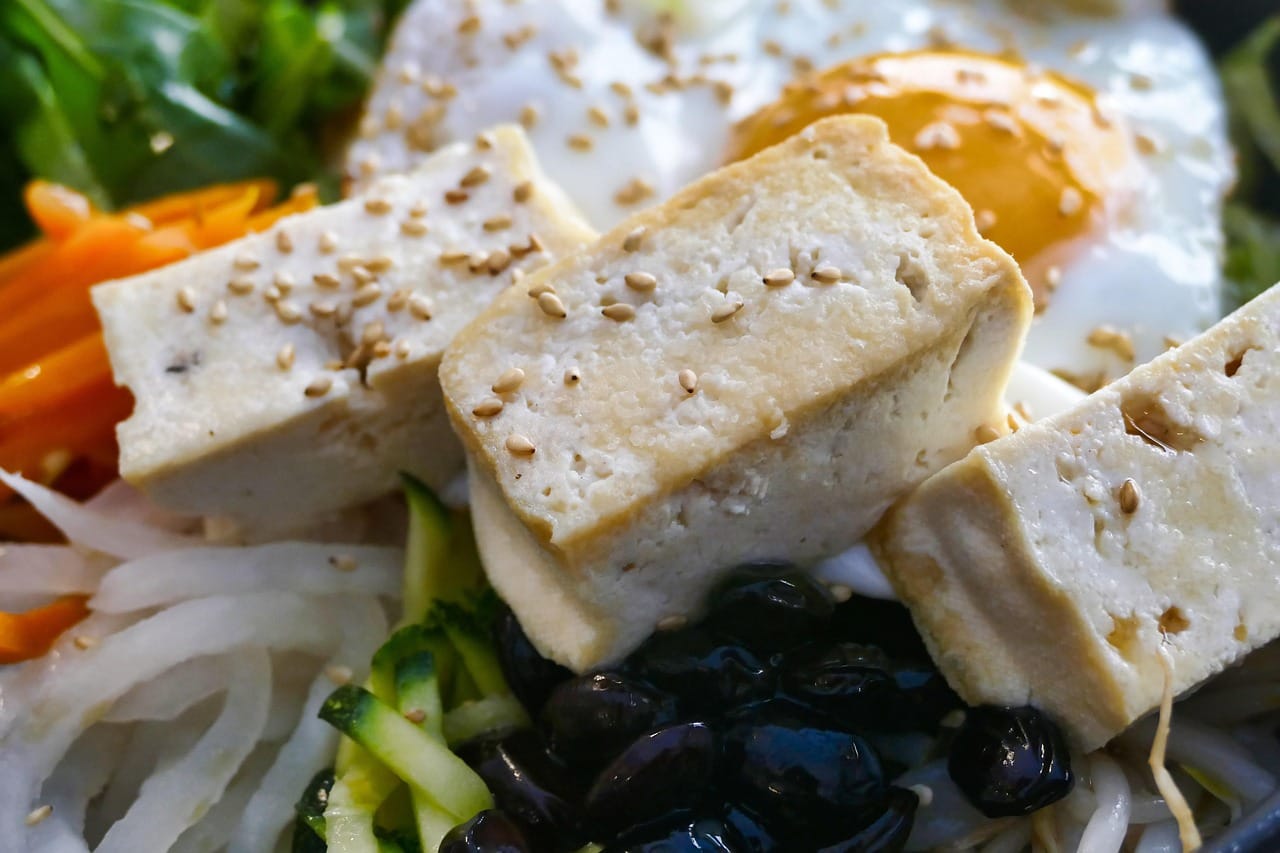
Making tofu at home is simpler than you’d think: you make soy milk, add a coagulant, and press the curds. Done. But which coagulant you choose does matter. It affects texture, flavour, ease of use, and what type of tofu you can make. In this article I compare the three main options, so you know what to keep on your shelf.
1. Calcium sulfate (gypsum): the all-rounder
Calcium sulfate, commonly called gypsum or simply “tofu coagulant”, is by far the most widely used coagulant in the world. And for good reason: it’s very easy to work with.
The powder dissolves poorly in water, and that’s actually the beauty of it. You make a slurry in a little hot water, stir it into your soy milk at 80–85 °C, and coagulation happens slowly and evenly. No rush, no panic. The curds are fine, uniform and springy, exactly what you want for a good block of tofu.
Dosage is around 3–5 grams per litre of soy milk, roughly one and a half teaspoons per litre. The flavour is virtually neutral with a very mild sweetness, and it adds calcium to your tofu as well. A nice perk if you eat plant-based.
One important note: always use food-grade calcium sulfate, never construction-grade plaster or craft gypsum. Those contain impurities you don’t want in your food.
Our tofu coagulant (calcium sulfate) is food-grade and comes with a recipe. Want everything in one go, including a tofu press and cheesecloth? Have a look at our complete tofu starter kit.

2. Nigari (magnesium chloride): the Japanese classic
Nigari is the traditional Japanese tofu coagulant, derived from seawater after table salt has crystallised out. It consists mainly of magnesium chloride and behaves quite differently from gypsum: it dissolves instantly and reacts fast. That makes it trickier to use. Your stirring technique and timing need to be on point.
Dosage is about 3 grams per litre of soy milk (as flakes or powder) or around 10 ml per litre (as liquid). Add it in two stages, stir very briefly and gently, then leave the pot undisturbed for 15 minutes.
The flavour is subtly mineral, sometimes described as “umami-like”, but overdose it and you get bitterness. The word nigari comes from the Japanese nigai, meaning bitter. So careful measuring matters.
You can buy Nigari here.
3. GDL (glucono delta-lactone): for silken tofu
GDL is a white powder that occurs naturally in honey and fruit. GDL itself isn’t acidic, but once you dissolve it in warm water, it slowly hydrolyses into gluconic acid. That gradual drop in pH means your soy milk doesn’t break into curds. Instead, it sets as a whole into a smooth, pudding-like gel.
This is how virtually all commercial silken tofu is made, and it’s the only way to get that silky-smooth result at home. Use 1 to 1.5 grams per 100 grams of dried soybeans, dissolve it into the soy milk, pour it into a mould, and hold it at 80–90 °C for about 45 minutes (in a water bath or steam oven). Don’t stir, don’t press. Just let it set.
The flavour is very neutral, with at most a faint sour note if you use too much. Our GDL is food-grade and is also widely used as an acidifier in dry-cured sausage making.

In a pinch: lemon juice or vinegar
Got none of the above? Two tablespoons of lemon juice or white vinegar per litre of soy milk (diluted in half a cup of water) will also make tofu. The curds are coarser and crumbly, the yield is lower, and there’s a noticeable flavour. Lemon gives a fresh citrus tang, vinegar a sharper edge. The result is closer to ricotta than to a proper block of tofu, but for a spur-of-the-moment experiment it works fine.
Comparison at a glance
| Calcium sulfate (gypsum) | Nigari (MgCl₂) | GDL | Lemon juice / vinegar | |
|---|---|---|---|---|
| Type | Salt (Ca²⁺) | Salt (Mg²⁺) | Acid (slow-release) | Acid (fast) |
| Dosage | 3–5 g/L | 3 g/L (flakes) or 10 ml/L (liquid) | 1–1.5 g per 100 g dried beans | ~30 ml/L |
| Speed | Slow | Fast | Gradual | Fast |
| Result | Springy, smooth, versatile | Firm, fine, slightly rustic | Silky, pudding-like | Firm, crumbly, coarse |
| Flavour | Neutral, mildly sweet | Subtle mineral, bitter if overdosed | Neutral, faint sourness if overdosed | Noticeable lemon or vinegar tang |
| Difficulty | Easy | Medium | Easy (weigh precisely) | Easy |
| Best for | All tofu styles | Firm tofu, Japanese style | Silken tofu only | Emergency, ricotta-style |
Summary: which coagulant should I pick?
In short: start with calcium sulfate (gypsum). It’s cheap, forgiving, neutral in flavour, and gives you the best yield. Want to make silken tofu? You’ll need GDL, because nothing else produces the same result. Nigari is for those who want to follow the Japanese tradition and are willing to pay a bit more attention to technique. And lemon juice or vinegar? Keep those as plan D.
One last thing: how you press matters more than which coagulant you use. Longer and heavier pressing gives firmer tofu, regardless of what you coagulated with. So experiment, but start simple.
Frequently asked questions

About the Author (Meneer Wateetons)
Meneer Wateetons is a renowned Dutch foodwriter, teacher, fermentation specialist, sausage maker and the owner of startercultures.eu. He has written 9 books on culinary topics such as fermentation, alcohol making, sausages and charcuterie making and deep frying. He has taught many hobbyists, chefs and food professionals about these topics.
Related Posts
Preserved lemons: how to salt-cure and ferment your own
Preserved lemons are a Moroccan staple. We cover two routes: the classic salt-cured method, and a low-salt version that genuinely ferments. Plus variations, peel advice and common mistakes.

How to make yogurt at home – and answer to all your questions
Learn how to make yogurt at home: from Greek yogurt to Bulgarian yogurt and skyr. With an extensive FAQ covering the most common questions and problems.

What is kombucha?
What is kombucha? Discover what this tangy fermented tea drink is: the SCOBY, the flavour, where it comes from, and how to brew and drink it yourself.