
Preserved lemons: how to salt-cure and ferment your own
Category: Fermentation
Preserved lemons turn up everywhere from Middle Eastern cooking, in Moroccan tagines above all, to Indian kitchens further east. Use them anywhere you would reach for lemon or lemon zest. The peel softens, the bitterness fades, and what you are left with is a deep, salty citrus flavour no fresh lemon will ever give you.
They tend to get called fermented lemons, though whether this really is fermentation is open to debate. The classic method uses so much salt that every microbe struggles, lactic acid bacteria included, and those can handle a fair amount of salt. Think of it as salt-curing rather than the lively lactic fermentation you get with sauerkraut. If you want more fermentation and less salt, that works too, and there is a recipe for it further down. Either way, the lemons transform into something remarkably good.
Preserved lemons recipe
Here is the basic version. You really only need two things: lemons and salt. Spices are optional, but they do make it more interesting.
You will need (for a jar of roughly 750 ml):
- 6 unwaxed lemons (plus 2 to 4 more for juicing)
- coarse sea salt (preferably without iodine or anti-caking agents, though it is no disaster if yours has them)
- optional: a cinnamon stick, a few bay leaves, some black peppercorns or coriander seed
- a clean glass jar with a lid (avoid metal lids, the salt and acid will corrode them)
How to do it:
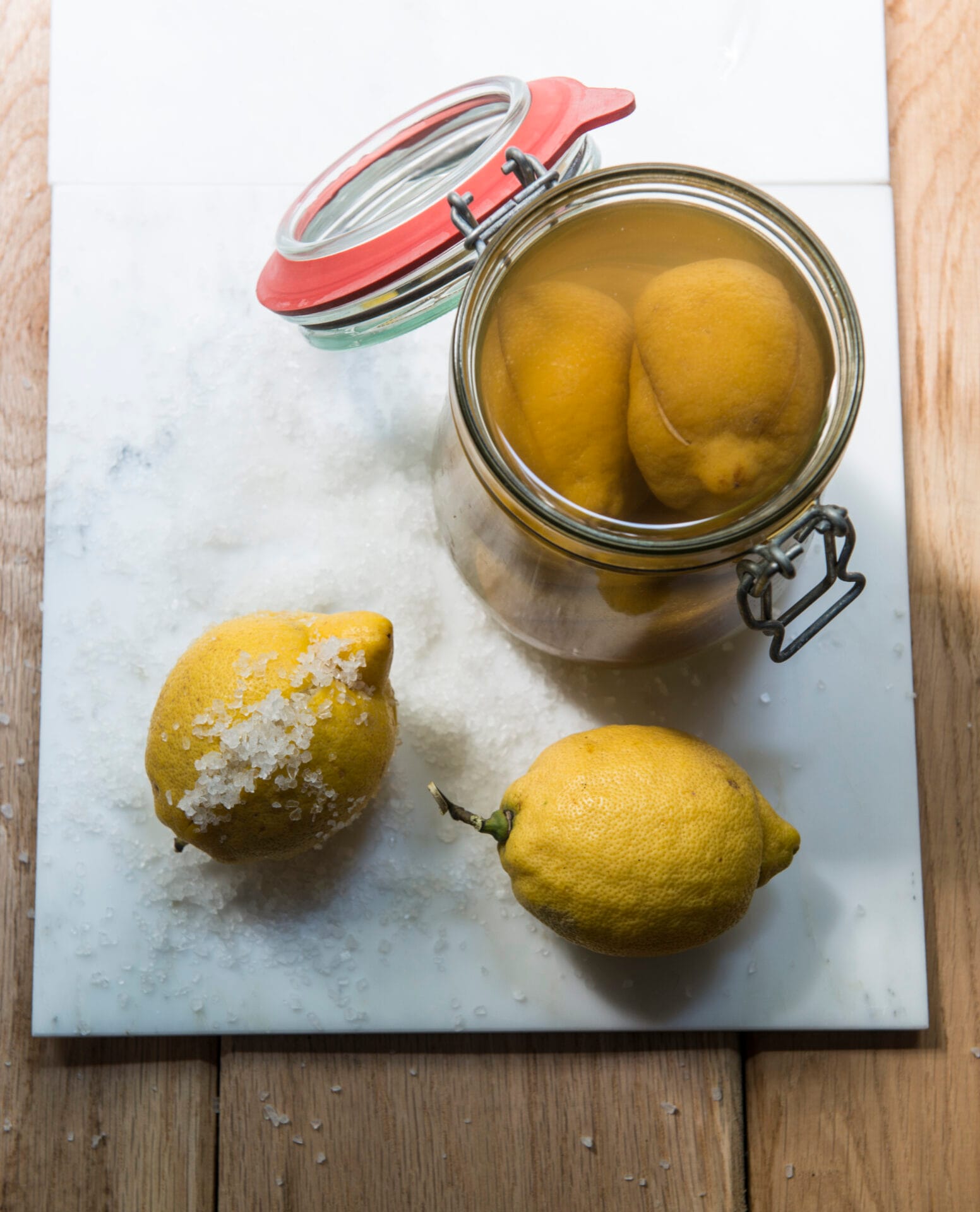
- Wash the lemons well. Trim off the ends, stand each lemon upright and cut it into quarters, but not all the way through: leave the base intact so it opens up like a flower.
- Rub plenty of salt into the cuts. Be generous. The salt is what will keep these lemons going more or less forever.
- Juice the remaining lemons.
- Take your jar. Put a layer of salt in the bottom, press in a salted lemon, scatter more salt on top and repeat until the jar is full. Press the lemons down firmly so they release their juice.
- Add your spices if using, then pour in the fresh lemon juice until the lemons are completely submerged. Nothing should stick out above the liquid.
- Close the jar and leave it at room temperature. Give it a shake now and then over the first few days to distribute the salt.
After about a month they are ready: the peel is soft and the bitterness has gone. Store the jar somewhere cool from then on. Kept properly under the brine it will easily last six months, often a good deal longer.
To use one, rinse it briefly, scrape out the flesh and work with the peel. Finely chopped through a tagine, a dressing, a mayonnaise or roasted vegetables: a little goes a long way.
Fermented lemons recipe
The method above leans on a lot of salt, which makes it closer to curing than to fermenting. If you want the lactic acid bacteria to actually do their work, bring the salt down. Use roughly 2 to 4 percent salt, calculated on the combined weight of the lemons and the juice. At that concentration the bacteria stay active and a real fermentation gets going.
You can taste the difference. These lemons are ready sooner and taste funkier, with the slightly sour, living edge you know from sauerkraut or kimchi. The trade-off is shelf life: less salt means less protection. Ferment them for at least two weeks at room temperature, keep them well under the brine and store them cold after that.
Ingredients
- 5 unwaxed lemons
- 3 lemons (for juicing)
- 1 cinnamon stick
- 2 g coriander seed
- 2% sea or rock salt, calculated on the total weight of juice and lemons
Method
- Wash the unwaxed lemons and cut them in half.
- Juice the other 3 lemons and dissolve the salt in the juice.
- Pack everything into a jar and press down well. Make sure the lemons stay submerged.
- Ferment under a weight, slightly below room temperature, for at least 4 weeks. Longer is fine.
- Move to the fridge to halt the fermentation.
Tips and variations
- We once made a version of this with kumquats, flavoured with cumin, pepper and coriander seed. Superb.
- Also excellent: an Indian take using limes with mustard seed, garam masala, curry leaf, turmeric and the tiniest pinch of asafoetida.
Unwaxed lemons? Mind the peel
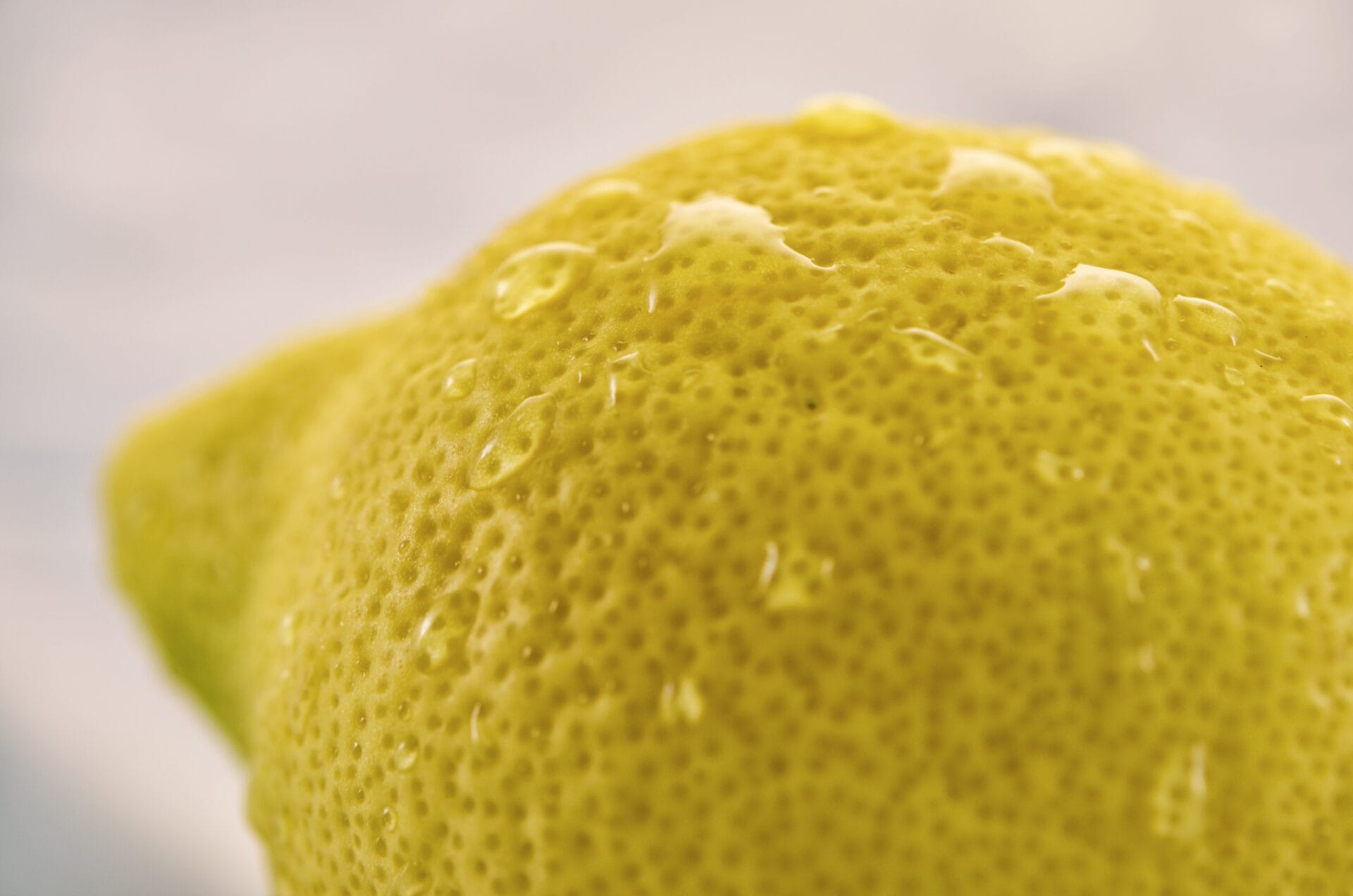
Since the peel is the part you actually eat, its quality matters. You will often read that citrus fruit should be scrubbed to remove the wax coating. That coating is most likely shellac, secreted by a small beetle. Lovely stuff, incidentally, and it will polish your oak side table beautifully. Under the name E904 it is widely used in the food industry, to make chocolates glossy or to stop citrus fruit drying out. The WHO considers it harmless, so a little of it in your cake or your brine jar is nothing to lose sleep over.
The better reason to look closely at your lemon peel is the fungicide sprayed onto it. Imazalil in particular is unpleasant stuff, and where it has been used the advice is not to eat the peel. Washing or scrubbing helps only so much: citrus peel is irregular and therefore hard to clean properly, and many of these compounds do not dissolve well in water. So look for unwaxed, unsprayed fruit, or lemons explicitly labelled as having edible peel.
Common mistakes
Preserving lemons is simple, but a few things do go wrong regularly. Letting the lemons sit above the brine is the big one: anything poking out above the liquid can grow mould. Skimping on salt in the dry method creates the same risk. People also mistake a white, cloudy film for spoilage when it is usually harmless yeast that you can simply skim off. Fuzzy mould, on the other hand, means the jar goes in the bin.
Want to get to grips with the technique more broadly? Read our step-by-step guide to fermenting vegetables, or start with something forgiving like homemade sauerkraut.
Frequently asked questions


About the Author (Meneer Wateetons)
Meneer Wateetons is a renowned Dutch foodwriter, teacher, fermentation specialist, sausage maker and the owner of startercultures.eu. He has written 9 books on culinary topics such as fermentation, alcohol making, sausages and charcuterie making and deep frying. He has taught many hobbyists, chefs and food professionals about these topics.
Related Posts

How to make yogurt at home – and answer to all your questions
Learn how to make yogurt at home: from Greek yogurt to Bulgarian yogurt and skyr. With an extensive FAQ covering the most common questions and problems.

What is kombucha?
What is kombucha? Discover what this tangy fermented tea drink is: the SCOBY, the flavour, where it comes from, and how to brew and drink it yourself.

How to make sauerkraut – including a recipe
How to make sauerkraut: recipe and everything about fermentation Category: Fermentation Making sauerkraut is one of the easiest things you can do [...]