
What is kombucha?
Category: Fermenting, Learn
Kombucha is a tangy, lightly sparkling drink made from fermented tea. You will know it by its sharp acidity, a gentle fizz, a hint of residual sweetness and a faintly yeasty aroma. This article walks you through exactly what kombucha is: the drink, the tea, the SCOBY, where it comes from, how you make it and how you drink it.
What is kombucha as a drink?
Kombucha is a fermented drink made from sweetened tea and a living culture of bacteria and yeasts. That culture eats the sugar and turns it into acids, carbon dioxide and a tiny amount of alcohol. What you are left with is a drink that tastes fresh and sour, fizzes lightly, and still carries a touch of sweetness and the pleasant astringency of tea.
The flavour depends on how long you let it ferment. The longer it sits, the more sugar is converted and the more sour it becomes. Around nine days at room temperature is a sweet spot in our book: sour enough to be interesting, not so sour that it makes you wince. And when you brew it yourself, that balance is entirely in your hands. Some people like a mild, sweet kombucha, others prefer more bite.
Kombucha belongs to the same family as water kefir, ginger beer and jun: fermented soft drinks. The difference lies in the micro-organisms and the base. Kombucha always starts from tea.
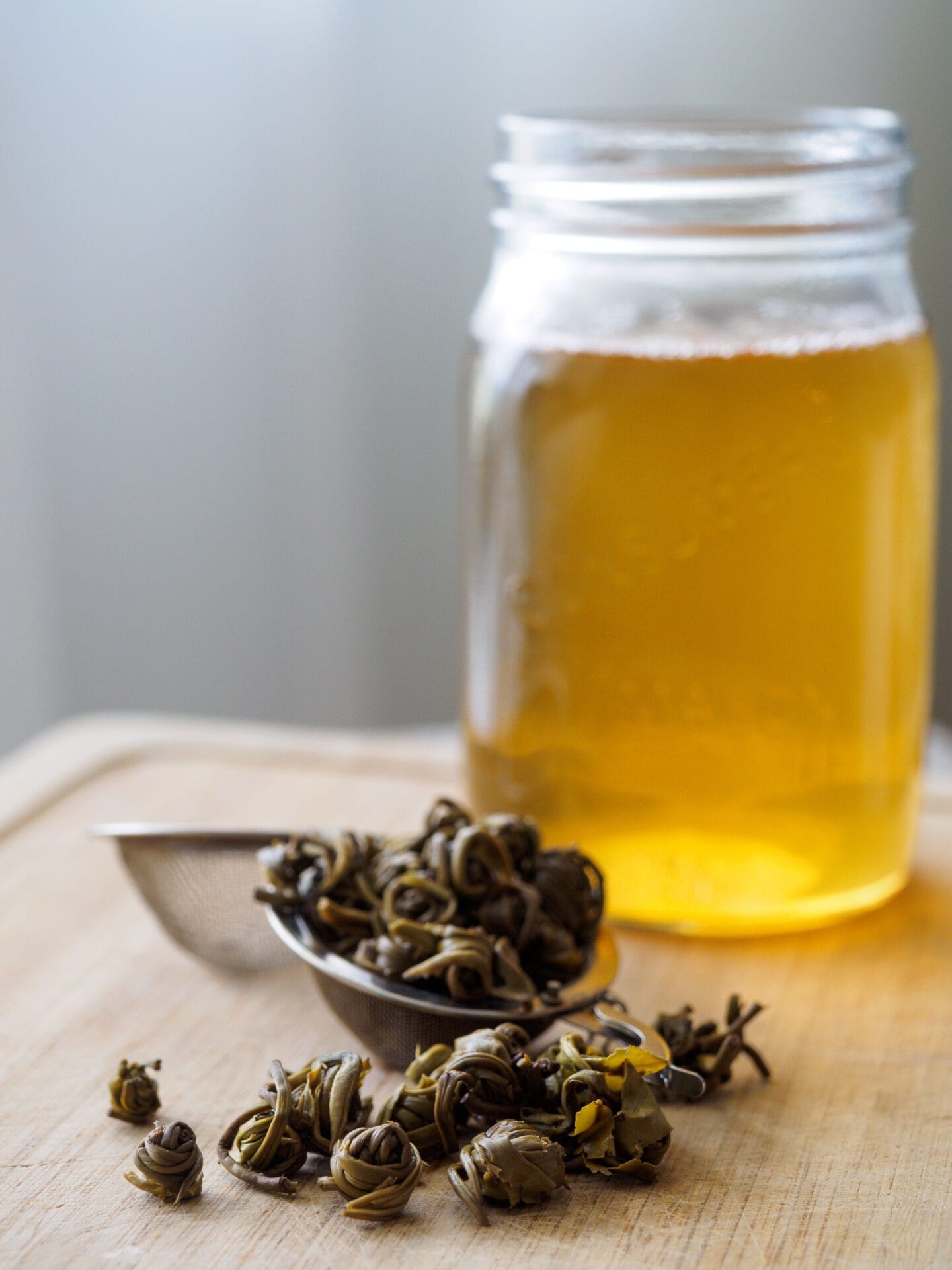
What is kombucha tea?
Strictly speaking, “kombucha tea” is a bit of a tautology, because kombucha already is fermented tea.
The base is simple. You brew black or green tea, dissolve sugar in it and let it cool. Per litre of water you use roughly 5 to 7 grams of tea and 50 to 100 grams of sugar. Use real tea, so black, green, white or even lapsang souchong. No herbal infusions, no rooibos, and no Earl Grey or other teas with added oils, since those can throw the culture off balance.
And the sugar? That is not for you, but for the little critters. The bacteria and yeasts need it as fuel. Most of it disappears during fermentation, so your finished drink is far less sweet than where it started.

What is a kombucha SCOBY?
The SCOBY is the living heart of your kombucha. SCOBY is short for Symbiotic Culture of Bacteria and Yeast: a symbiotic culture of bacteria and yeasts that work together to ferment your tea.
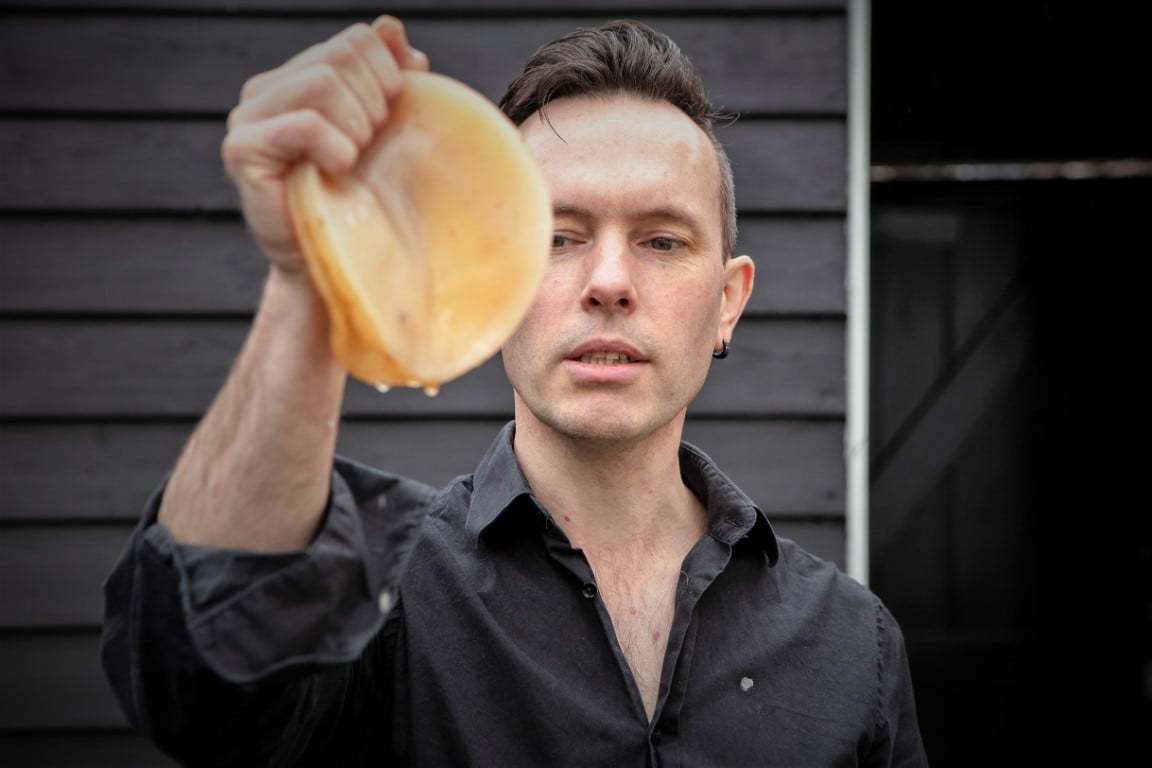
During fermentation, a jelly-like disc forms on top of the liquid. Almost everyone calls that disc “the SCOBY”, and it is also fondly known as “the mother”. Technically that is not quite right: the disc is called the pellicle or biofilm, and it is made of cellulose produced by the acetic acid bacteria. The real SCOBY is the whole thing: the liquid and the pellicle together. That combination is the living starter you need to begin.
So what do those micro-organisms actually do? Roughly three groups work together. The yeasts convert sugar into alcohol and carbon dioxide. The acetic acid bacteria turn that alcohol into acid and build the pellicle as they go. And lactic acid bacteria add to the fresh, sour flavour. Together they produce that characteristic kombucha taste.
You can order a tested, organic kombucha SCOBY from us, guaranteed free of pathogens. That is the safest way to get started.
Where does kombucha come from?
Honest answer: nobody knows for sure. The origins of kombucha have faded over the centuries. It is generally believed that the drink emerged thousands of years ago in East Asia, possibly in China or in the wider region around Eastern Europe and Russia.
There are some lovely stories doing the rounds, such as the one about a Korean physician named “Kombu” who supposedly treated a Japanese emperor with the fermented tea around 415 AD, after which the name “kombu-cha” (kombu plus tea) is said to have been born. Is any of that true? No idea. It is folklore, not history. What we do know for certain: the drink has been consumed for a very long time in places such as China, Japan and Eastern Europe, and has only become popular in the West over the past few decades. These days you will simply find it on the supermarket shelf.
How is kombucha made?
At its core, making kombucha is surprisingly simple. You brew sweetened tea, let it cool, add your SCOBY and wait.
The steps in order:
- Brew tea (5-7 grams per litre) and dissolve 50-100 grams of sugar per litre in it.
- Let the sweetened tea cool completely to room temperature. Tea that is too hot will kill your culture.
- Pour the tea into a clean glass jar and add roughly 10% mature kombucha plus the pellicle.
- Cover with a cloth and an elastic band. No lid: the fermentation needs oxygen.
- Let it ferment for 7 to 14 days at room temperature or a little warmer (20-30°C), out of direct sunlight.
- Start tasting regularly after a week. Fresh, sour and no longer too sweet? Done.
- Always keep at least 10% of your kombucha plus the pellicle for your next brew.
That is the short version. Want it step by step, with or without a SCOBY, including the second fermentation for flavour and fizz? Then read our complete guide to making kombucha at home.
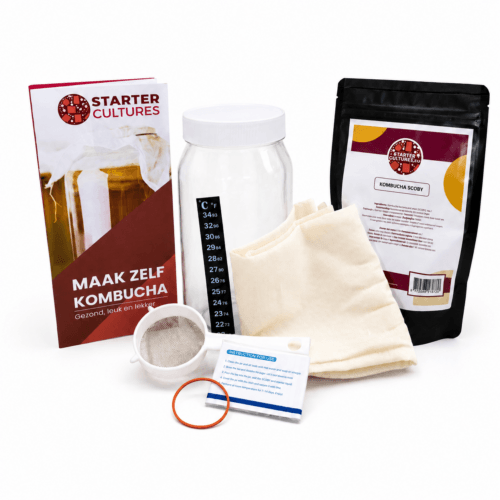
Prefer to have everything in one box? Our kombucha starter kit contains everything you need to get going. And if you like to do things in style, take a look at the Kefirko kombucha fermenter with stand and tap: good-looking enough to leave out on the counter.
How do you drink kombucha?
However you like, really. But a few ways work especially well.
Pure and chilled. The classic. Cold from the fridge or over ice, on a terrace in summer. As easy as a soft drink, but with character.
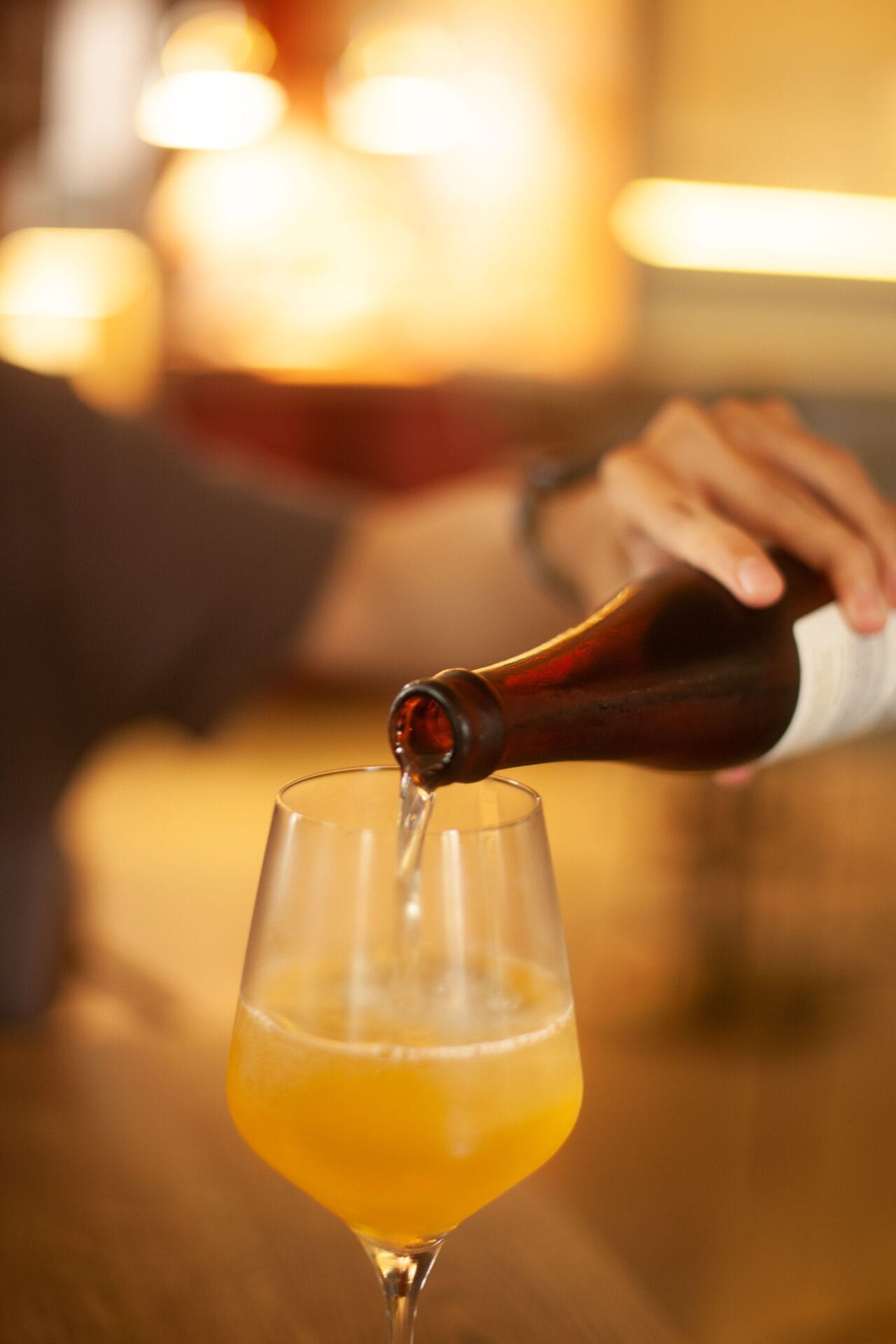
With or without bubbles. After the first fermentation, kombucha is fairly still. If you want fizz, you do a second fermentation (F2): pour the kombucha into a pressure-resistant bottle, add a little sugar or fruit juice and leave it sealed for a few days. The yeasts turn that into carbon dioxide. Prefer it flat? Just drink it after the first fermentation.
Mixed and flavoured. During that second fermentation you can vary endlessly with flavourings: ginger, lemon, berries, orange or a splash of fruit juice. That way one base becomes a whole range of flavours of your own.
In cocktails and mocktails. Thanks to its grown-up, tangy flavour, kombucha works wonderfully as the base for a mocktail, or as a refreshing, slightly sour element in a cocktail. It adds depth without you having to pile on the sugar.
Looking for more? Read 5 surprising things you can do with kombucha.


Frequently asked questions

About the author (Meneer Wateetons)
Meneer Wateetons is a renowned Dutch foodwriter, teacher, fermentation specialist, sausage maker and the owner of startercultures.eu. He has written 9 books on culinary topics such as fermentation, alcohol making, sausages and charcuterie making and deep frying. He has taught many hobbyists, chefs and food professionals about these topics.
Related Posts
Preserved lemons: how to salt-cure and ferment your own
Preserved lemons are a Moroccan staple. We cover two routes: the classic salt-cured method, and a low-salt version that genuinely ferments. Plus variations, peel advice and common mistakes.

How to make yogurt at home – and answer to all your questions
Learn how to make yogurt at home: from Greek yogurt to Bulgarian yogurt and skyr. With an extensive FAQ covering the most common questions and problems.

How to make sauerkraut – including a recipe
How to make sauerkraut: recipe and everything about fermentation Category: Fermentation Making sauerkraut is one of the easiest things you can do [...]