
How to make sauerkraut: recipe and everything about fermentation
Category: Fermentation
Making sauerkraut is one of the easiest things you can do in the kitchen. All you need is cabbage, salt, and a jar. But how much salt? How long does it take? And why does a white film sometimes appear on the surface? In this article you will learn how cabbage fermentation works, what to look out for, and at the end you will find a tried-and-tested recipe for making your own sauerkraut.

How to make sauerkraut: how does fermentation work?
White cabbage is naturally full of lactic acid bacteria and sugars. When you add salt and cut off the oxygen supply, those bacteria get to work: they convert sugars into lactic acid. This lactic acid lowers the pH of your cabbage to a level where spoilage and pathogenic bacteria can no longer survive. Your cabbage is preserved. It is one of the cleverest preservation methods humanity has ever come up with.
But there is more to it than just preservation. The same bacteria also produce aromas, carbon dioxide, and dozens of other compounds that turn a fairly bland white cabbage into something entirely new (and delicious). Sauerkraut does not taste like cabbage with acid added to it. It tastes like sauerkraut. Those are two different things.
The bacteria, the sugars, and the moisture: everything you need is already in your cabbage. You just need to give it the right conditions. Want to learn more about how vegetable fermentation works in general? Read our step-by-step guide for beginners.

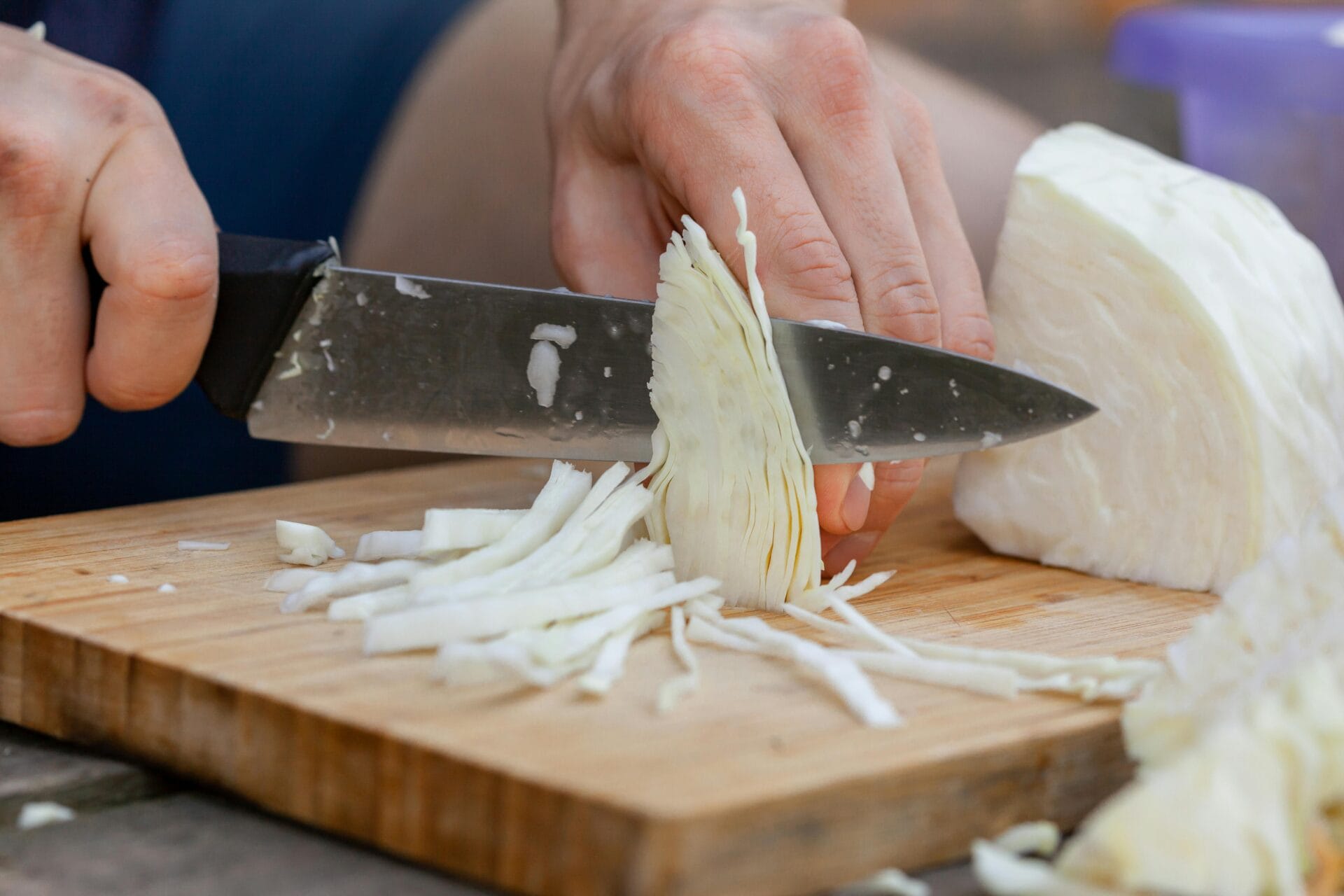
Making sauerkraut from white cabbage
White cabbage is the classic choice, and for good reason. It contains enough water to submerge the sauerkraut in its own brine during fermentation. Slice it as thinly as possible: thin strips give more flavour and a better texture. A wooden vegetable slicer makes this job much quicker and more comfortable.
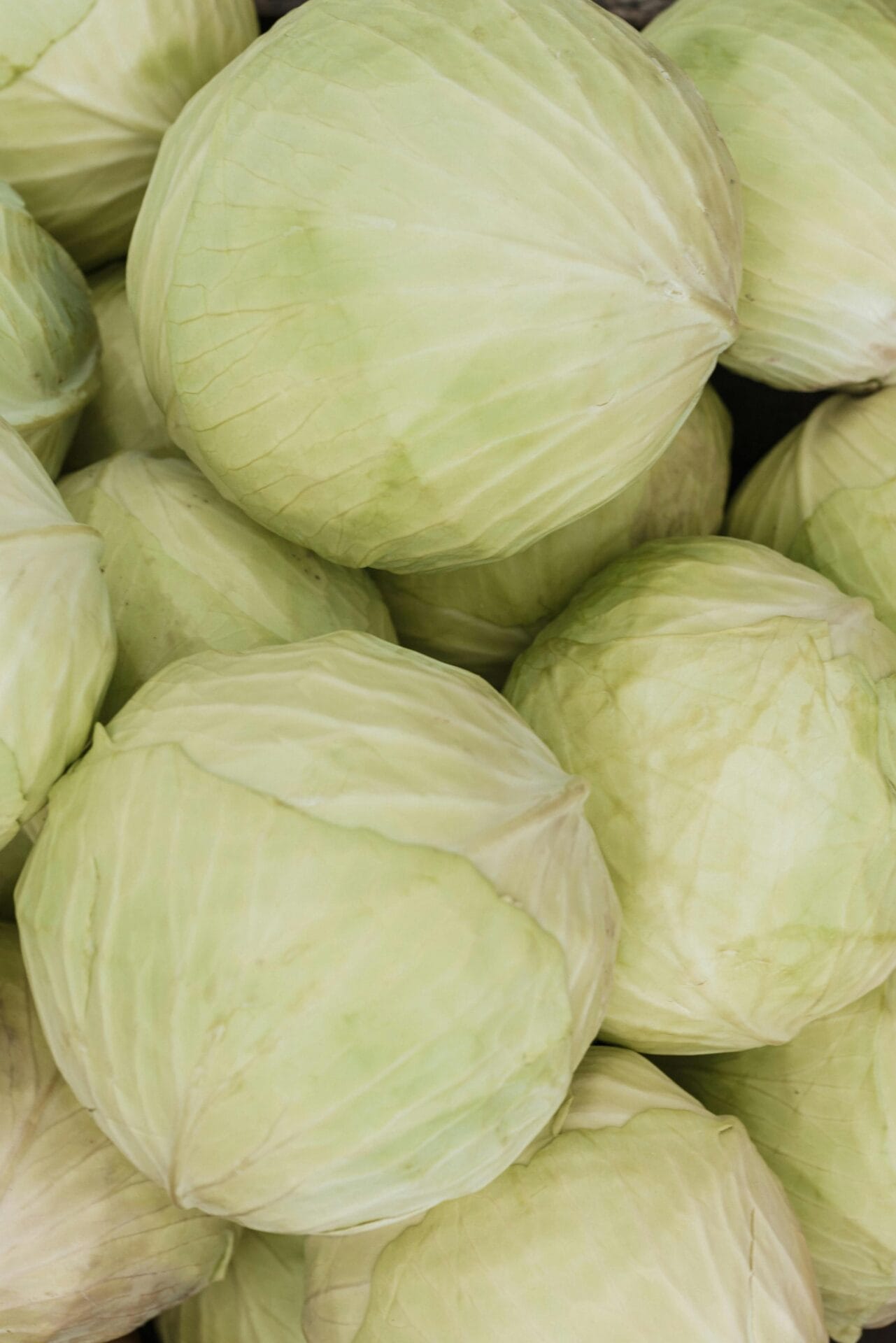
Pointed cabbage (spitskool) is the perfect beginner’s vegetable. Contrary to what you might expect, pointed cabbage releases moisture very easily with just a little kneading or pounding. Its flavour is slightly milder and sweeter than that of white cabbage.
Other varieties such as red cabbage or savoy cabbage ferment perfectly well too. Adding a small amount of red cabbage to white cabbage gives you a beautiful pink sauerkraut.
Fermenting sauerkraut: the role of salt
Salt is the most important ingredient after the cabbage itself, but not because it does the preserving. The acid does the actual preservation work. Salt gives the lactic acid bacteria a head start: they tolerate salt better than most other micro-organisms. By adding the right amount of salt, the unwanted guests (yeasts, moulds, spoilage and pathogenic bacteria) are suppressed, allowing the lactic acid bacteria to do their work undisturbed.
The right amount is 2%, or 20 grams per kilogram of cabbage. That number is not arbitrary: below 2%, the inhibition is insufficient and yeasts and other bacteria get their chance, leading to mushy textures, off-flavours, and sometimes genuinely dangerous situations. Above 3%, you also inhibit the lactic acid bacteria themselves, fermentation stalls, and the result is simply too salty.
Always weigh your salt. Eyeballing it will go wrong sooner or later.
WHAT KIND OF SALT SHOULD I USE FOR SAUERKRAUT?
You can use any type of salt for making sauerkraut. You will read everywhere that you must use non-iodised sea salt. The idea is that iodine has an antibacterial effect and disrupts fermentation. In practice, the amount of iodine in regular table salt is so small that the effect is negligible. Use non-iodised salt if you have it, but there is no need to worry about it.
WHEN SHOULD YOU USE A STARTER CULTURE?
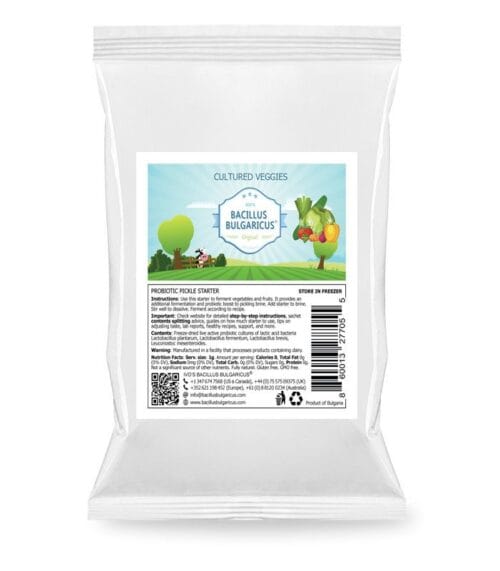
For regular sauerkraut, you do not need a starter. The bacteria are already on your cabbage. But there are situations where a vegetable fermentation starter culture is useful: when you want to ferment cooked vegetables, when working with sugar-rich vegetables or fruit, or when you want a more consistent and predictable fermentation. The starter introduces a broad range of lactic acid bacteria at once, which speeds up the process and reduces the chance of off-flavours.
At what temperature should you ferment sauerkraut?
Lactic acid bacteria work at virtually any temperature above freezing, but the temperature determines the character of your end product.
At 18–21°C (room temperature), fermentation takes two to three weeks. This is the most common method and gives good results.
Below 10°C, for example in a cellar or cool storage room, fermentation is much slower: six to eight weeks or longer. The result is more complex and fuller in flavour, because the bacteria that are active at low temperatures produce different and more flavour compounds. If you have a cool space available, give it a try.
Above 25°C, fermentation proceeds quickly, but the flavour becomes flatter and the texture softer. Never place your sauerkraut in direct sunlight or near heat sources.
How long should sauerkraut ferment?
At room temperature, your sauerkraut will be ready in two to three weeks. At cooler temperatures, it can take six to eight weeks.
You know it is done when it tastes good (this is always the primary criterion), when gas production has stopped or nearly stopped, when the pH is below 4.6 (if you want to measure it), and when at least two weeks have passed at room temperature.
After that, put the sauerkraut in the fridge. This virtually stops fermentation. In the fridge, sauerkraut keeps for months, as long as the cabbage stays submerged in brine. Always keep the brine.
Mould on your sauerkraut: what now?
You open your jar after a week and see something white on the surface. Reason to panic? No.
A white haze or white flakes on the surface are almost always kahm yeast: a yeast that likes to settle at the boundary between liquid and air. Kahm yeast is not harmful, but if left in place, it can give the sauerkraut a slightly bitter or yeasty taste. Skim it off as soon as possible with a clean spoon, make sure the cabbage is fully submerged in brine again, and carry on.
Actual mould is a different matter. Green, black, or pink mould that has grown into the cabbage itself: throw it away and start over. This is rare if you have used enough salt and kept the cabbage properly submerged.
The best prevention is simple: make sure the cabbage is always fully covered by brine. An airlock on your jar helps enormously: it lets carbon dioxide escape but keeps oxygen out. This makes kahm yeast practically impossible. The RotPot combines a jar, airlock lid, and spice mix in one package, ideal if you are fermenting for the first time.
Sauerkraut fermentation recipe
Ingredients (for approx. 750 grams of sauerkraut):
Equipment:
Method
1. Remove the outer leaves of the cabbage. Set one clean leaf aside.
2. Cut the cabbage in half, remove the hard core, and slice it as thinly as possible into strips.
3. Weigh the sliced cabbage and weigh out 2% of that weight in salt (20 grams per kilo).
4. Mix salt and cabbage in a large bowl. Then pound, squeeze, and knead the cabbage for five to ten minutes until it turns glassy and releases plenty of liquid. Let it rest briefly and repeat.
5. Add spices if desired and mix through.
6. Pack the cabbage into the jar layer by layer, pressing down firmly after each layer. The cabbage must be fully submerged in its own brine.
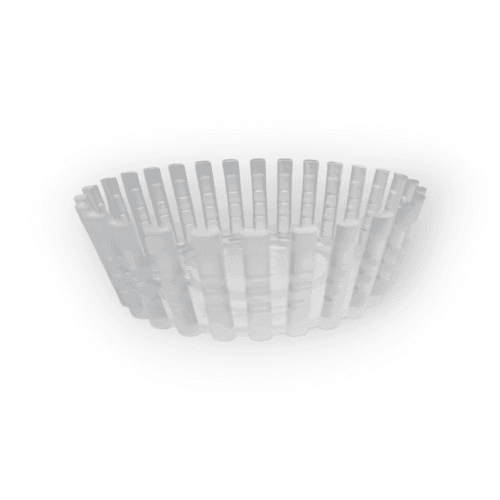
7. Cover with the reserved cabbage leaf or place something heavy on top (a weight stone, a bag filled with brine).
8. Sluit af met een airlock of deksel en zet de pot donker weg bij kamertemperatuur (18–21°C).
9. Check during the first few days that the cabbage remains submerged. Skim off any kahm yeast.
10. Taste after two weeks. Sour enough for your liking? Optionally measure the pH: it should be below 4.6 (usually around 3.5). Move to the fridge.
Variations
• Pointed cabbage: see above. Pointed cabbage is an excellent choice for beginners.
• Wine sauerkraut: add 50 ml dry white wine per kilogram of cabbage after fermentation is complete.
• Pink sauerkraut: mix a small amount of red cabbage through the white cabbage.
• Pointed cabbage with spices: pointed cabbage with fennel seed and orange zest is a surprising combination.
Further learning
Want to go deeper? Over Rot (in Dutch) covers everything about the microbiology of vegetable fermentation, including a full chapter on sauerkraut and all its variations. Prefer video? Our online vegetable fermentation course teaches you sauerkraut, kimchi, and pickles in 25 bite-sized video lessons.
Frequently asked questions
Everything you need to make your own sauerkraut


About the Author (Meneer Wateetons)
Meneer Wateetons is a renowned Dutch foodwriter, teacher, fermentation specialist, sausage maker and the owner of startercultures.eu. He has written 9 books on culinary topics such as fermentation, alcohol making, sausages and charcuterie making and deep frying. He has taught many hobbyists, chefs and food professionals about these topics.
Related Posts

Preserved lemons: how to salt-cure and ferment your own
Preserved lemons are a Moroccan staple. We cover two routes: the classic salt-cured method, and a low-salt version that genuinely ferments. Plus variations, peel advice and common mistakes.

How to make yogurt at home – and answer to all your questions
Learn how to make yogurt at home: from Greek yogurt to Bulgarian yogurt and skyr. With an extensive FAQ covering the most common questions and problems.

What is kombucha?
What is kombucha? Discover what this tangy fermented tea drink is: the SCOBY, the flavour, where it comes from, and how to brew and drink it yourself.